Hyperscale Infrastructure Intelligence
Strategic Question
Where can hyperscale data centers still be built in the United States under present-day power, land-use, and climate constraints? While most market analyses focus on demand growth, AI adoption, or capital flows, this study addresses a more structural constraint:
What is physically and infrastructurally feasible — and how much capacity remains?
Framework
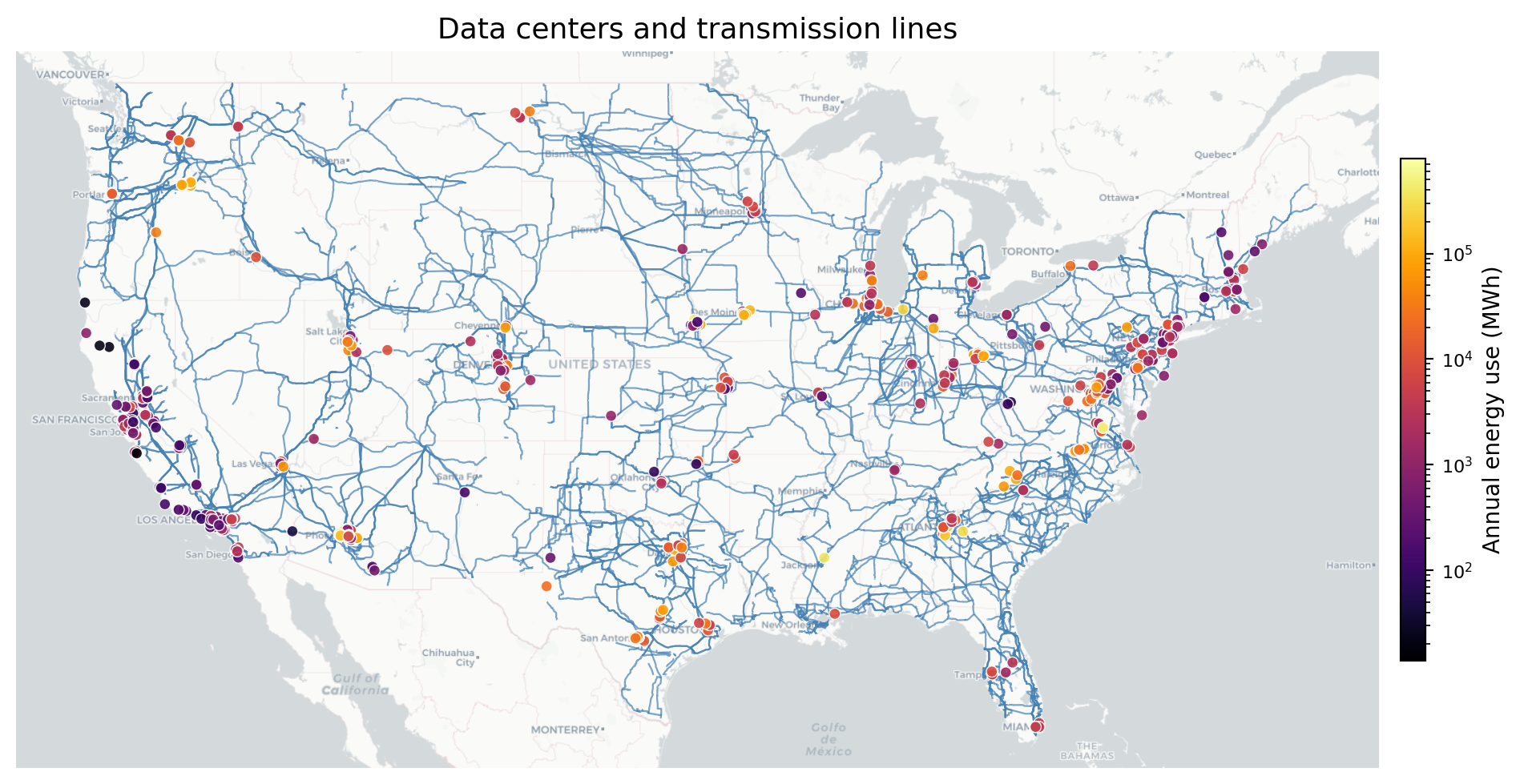
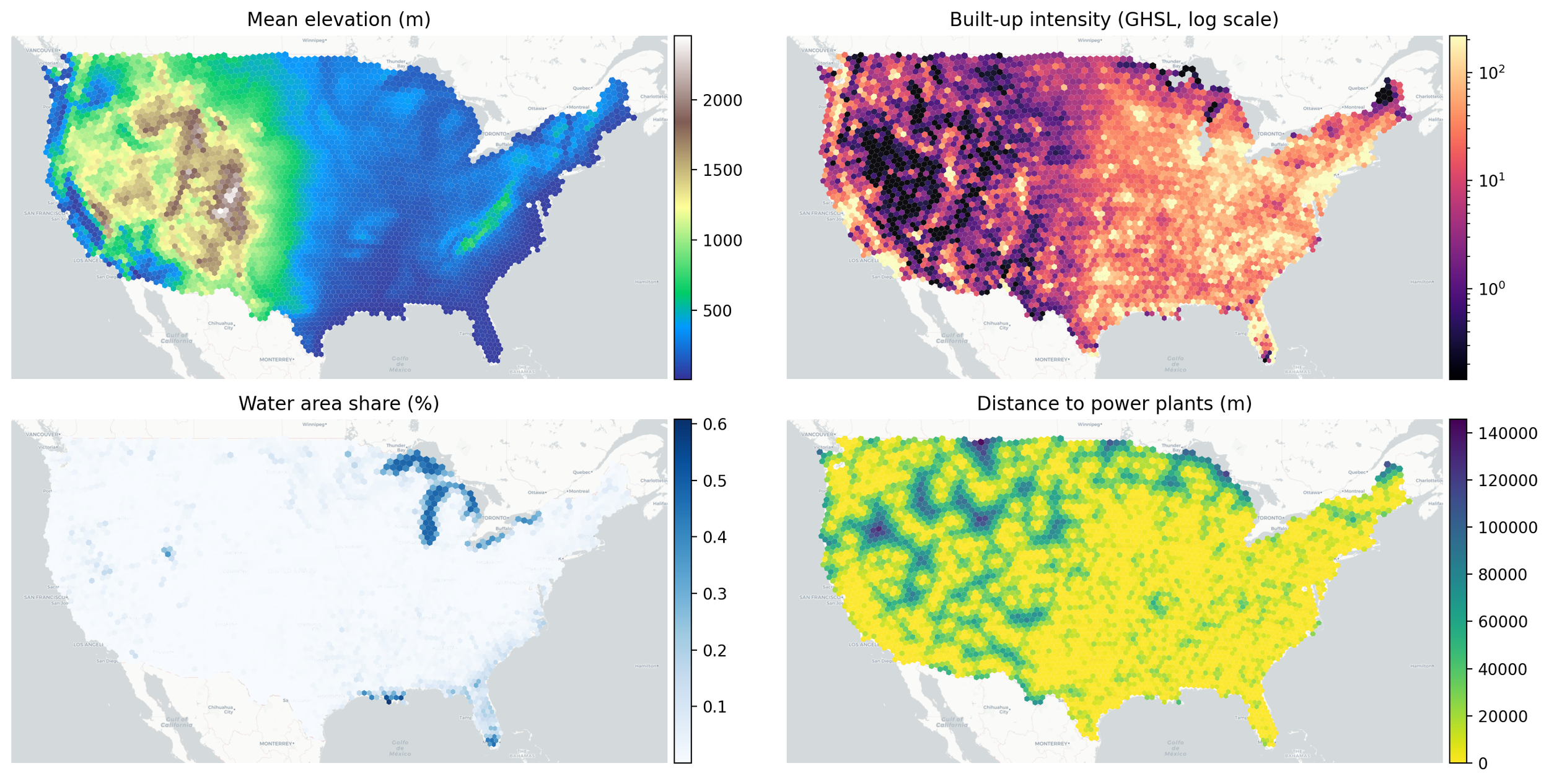
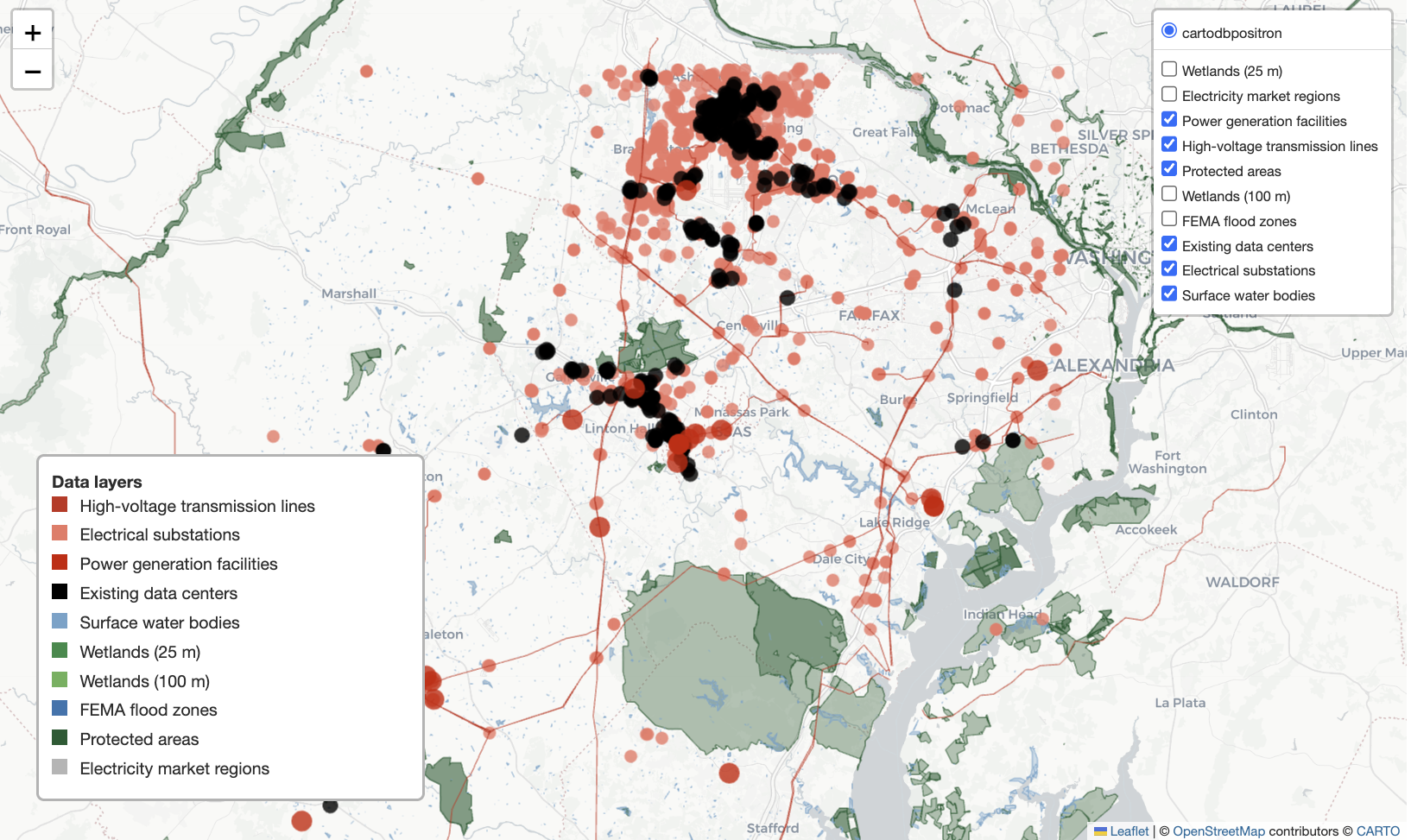
We developed a national-scale, constraint-first geospatial model covering the contiguous United States. The framework integrates:
High-voltage transmission adjacency
Substation and generation proximity
Land-use and protected areas
Terrain and topography
Climate exposure and cooling risk
And more
All variables were aggregated into a uniform national hexagonal grid to ensure consistent spatial comparability. Rather than forecasting demand, the model infers feasibility from revealed hyperscale siting behavior and present-day infrastructure conditions. Two independent unsupervised feasibility surfaces were constructed to ensure structural robustness.
Findings
Current hyperscale development is highly spatially concentrated. Both modeling approaches converge on a bounded national feasibility envelope substantially smaller than naive land-availability assumptions. Under present-day infrastructure conditions, total physically feasible U.S. hyperscale hosting capacity appears to lie in the tens of gigawatts — not the hundreds. Lower-to-mid feasibility ranges cluster around 25–50 GW, with upper-bound envelopes remaining below structural system limits. Exceeding these bounds would require meaningful transformation of grid infrastructure, regulatory constraints, or cooling paradigms.
Strategic Implications
This work reframes hyperscale expansion as a constraint-governed infrastructure problem, not purely a demand-driven growth story.
Applications include:
National grid planning and transmission prioritization
Long-horizon capital allocation strategy
Site pre-screening before detailed parcel due diligence
Regional feasibility benchmarking
Risk assessment for AI infrastructure exposure
Identification of structurally advantaged emerging corridors
The output is not a forecast.
It is a bounded national feasibility envelope — supporting infrastructure strategy at system scale.